Molfig is a Typst package for rendering molecular structure files in static documents.
It accepts PDB, mmCIF, BinaryCIF, and XYZ input, converts structures through a CPU-side Mol∗-style Model/Structure/Unit layer, exports static OBJ/STL/PLY mesh bytes, and delegates final document rendering to maquette.
You can try the web demo by maquette’s author to adjust the scene and copy the Typst source.
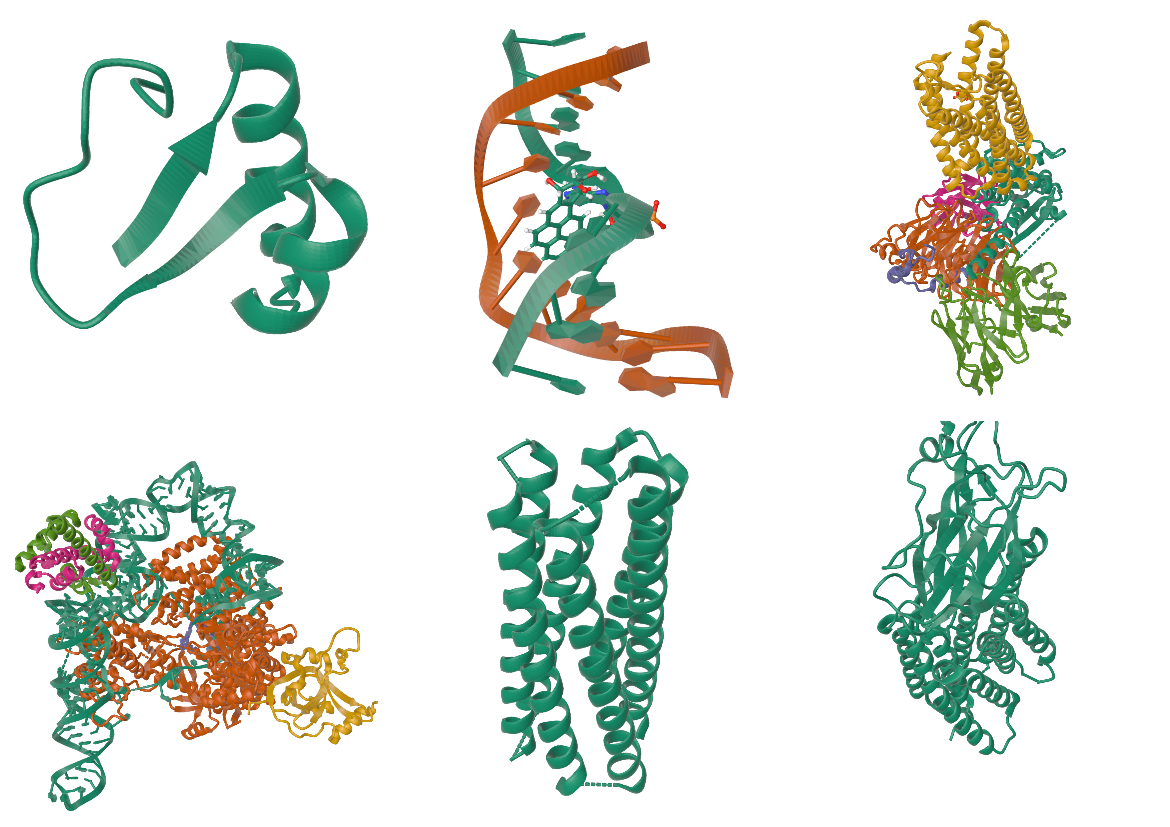
Quickstart
#import "@preview/molfig:0.1.5"
#set page(width: auto, height: auto, margin: 0mm)

// Uses structural data from RCSB PDB / wwPDB.
// PDB ID: 9R1O
// PDB DOI: https://doi.org/10.2210/pdb9R1O/pdb
// Deposition authors: Petrenas, R.; Ozga, K.; Chubb, J.J.; Woolfson, D.N.
// PDB archive data files are available under CC0 1.0.
#let pdb = read("9R1O.pdb", encoding: none)

#molfig.render(
  pdb,
  format: "pdb",
  representation: "cartoon",
  assembly: "1",
  mesh-format: "obj",
  quality: "high",
  center: true,
  output-format: "svg",
  config: (
    azimuth: 35,
    elevation: 24,
    background: "",
  ),
)
Rendered 9R1O Example
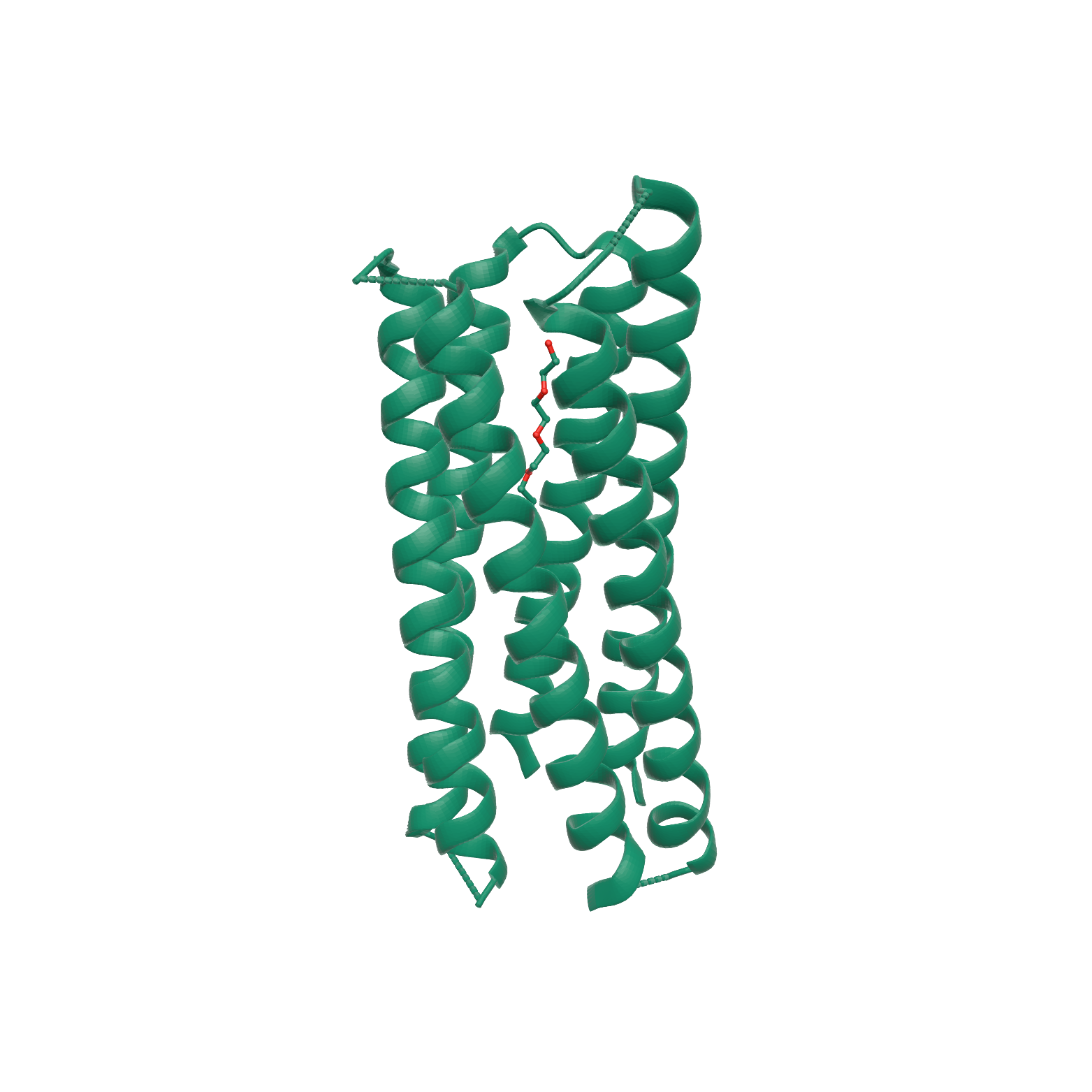
Structural data source: RCSB PDB / wwPDB, PDB ID 9R1O, DOI 10.2210/pdb9R1O/pdb. PDB archive data files are distributed under CC0 1.0.
XYZ Example
#import "@preview/molfig:0.1.5"

// Uses coordinate data from PubChem.
// PubChem CID: 702 (ethanol)
// PubChem3D conformer: 000002BE00000001
#let xyz = read("ethanol.xyz", encoding: none)

#molfig.render(
  xyz,
  format: "xyz",
  representation: "default",
  color-theme: "element-symbol",
  mesh-format: "obj",
  quality: "high",
  center: true,
  output-format: "svg",
  config: (
    azimuth: 35,
    elevation: 24,
    background: "",
  ),
)
Rendered Ethanol Example
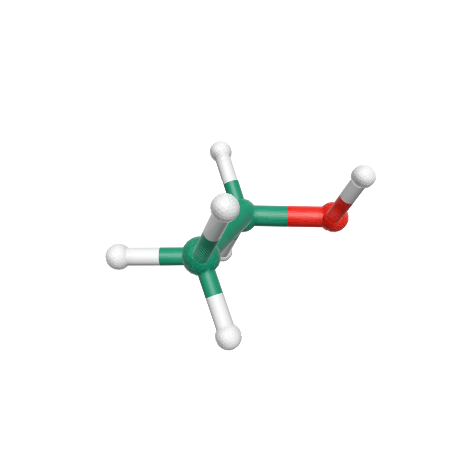
Coordinate data source: PubChem CID 702, PubChem3D conformer 000002BE00000001, retrieved through PubChem PUG REST.
Use format: "mmcif", format: "bcif", or format: "xyz" for text mmCIF, BinaryCIF, and XYZ inputs. For reproducible documents, prefer explicit format, representation, assembly, alt-loc, mesh-format, and geometry quality options instead of relying on auto-detection.
Examples
The package/examples directory contains complete example sources, rendered PDFs, and their accompanying structural data files. The example data files are kept under package/examples/data, together with attribution metadata.
The package/examples directory contains complete example sources, rendered PDFs, and their accompanying structural data files. The example data files are kept under package/examples/data, together with attribution metadata.
Public API
render(data, ..., config: (:), width: auto, height: auto)converts and renders through maquette.render-object(data, ...)returns generated mesh bytes, rendered content, and metadata.to-obj(data, ...),to-mtl(data, ...),to-stl(data, ...), andto-ply(data, ...)return export bytes.info(data, ...)returns molecular and mesh-planning metadata without rendering.mesh-info(data, mesh-format: "obj", config: (:), ...)delegates to maquette’s mesh metadata helpers for the generated mesh.
Common options include format, representation, color-theme, theme, assembly, alt-loc, block-index, block-header, quality, decimate, sphere-detail, linear-segments, radial-segments, radius-scale, atom-radius, bond-radius, ribbon-radius, ribbon-width, helix-profile, round-cap, sheet-arrow-factor, tubular-helices, infer-bonds, and center.
The data argument accepts bytes from read(..., encoding: none), inline string data for small examples, and Typst 0.15+ path values created with path("...").
Choosing A Mesh Format
- Use OBJ for the closest static Mol∗ exporter parity and readable diffs.
- Use STL when a downstream tool specifically requires binary triangle data.
- Use PLY when package-owned face group metadata is useful in a compact text mesh.
OBJ output can be paired with to-mtl. During render, OBJ material colors are automatically converted to maquette’s materials map; entries supplied through config.materials override generated colors. OBJ and PLY preserve Molfig group or operator metadata where the format can represent it. Binary STL follows Mol∗ static exporter behavior and keeps the two-byte facet attribute field at zero.
Documentation
The full Molfig manual is available at package/docs/documentation.pdf. It documents:
- installation and import conventions;
- input format handling, XYZ model behavior, and BinaryCIF block selection;
- every public command and return shape;
- mesh, representation, assembly, altLoc, and quality options;
- maquette passthrough configuration;
- metadata fields returned by
infoandrender-object; - licensing, third-party notices, and example data attribution;
- troubleshooting and development commands;
- embedded 9R1O and PubChem ethanol XYZ renderings.
The manual source is package/docs/documentation.typ, and it reads the package version from package/typst.toml.
Notes And Limits
Molfig emits static presentation meshes. representation: "surface" implements the ∗ Viewer Quick Styles Molecular Surface preset on the CPU and exports the result as OBJ/STL/PLY. Gaussian volume and density/volume visuals remain outside the static export contract; the size-dependent ViewerAuto path uses a CPU Gaussian surface for Huge and Gigantic structures.
IHM coarse sphere and gaussian rows remain available as coarse model units and participate in the size-dependent ViewerAuto Gaussian-surface path.
License And Notices
Molfig project code is licensed under the MIT License. See LICENSE.
Molfig ports or adapts Mol∗ behavior and includes Mol∗-derived reference data in the Rust/WASM implementation. Mol∗ is licensed under the MIT License, copyright (c) 2017 - now, Mol∗ contributors.
Bundled example structure files under examples/data are PDB archive data from RCSB PDB / wwPDB and are available under CC0 1.0. Per-file PDB IDs, DOIs, and recommended attributions are listed in examples/data/README.md.
See NOTICE.md and THIRD_PARTY_NOTICES.md for the full distribution notice.
Benchmarks
The benchmarks suite compiles the published PDB, mmCIF, and BinaryCIF examples in isolated Typst processes. It measures Molfig’s OBJ export pipeline by default and can include maquette rendering with --mode render. The runner provides pinned Nix builds of Typst 0.14.0, 0.14.1, 0.14.2, and 0.15.0 with a common hyperfine 1.20.0. The default shell uses Typst 0.15.0. The Molfig version defaults to package/typst.toml and can be changed without editing the benchmark source:
nix develop ./benchmarks --command \
  benchmarks/run.sh --version "$VERSION"
Pass --baseline-version together with --version to compare two Molfig releases on the same workload and receive hyperfine’s relative performance summary.
See benchmarks/README.md for case selection and runner options.
Development
cd wasm-plugin
cargo fmt --check
cargo test
node tests/validate-pubchem-xyz.mjs
cargo build --release --target wasm32-unknown-unknown
cp target/wasm32-unknown-unknown/release/molfig.wasm ../package/molfig.wasm
cd ../package
just docs
The checked-in package/molfig.wasm should be regenerated after Rust changes that affect the Typst plugin. Regenerate package/docs/documentation.pdf after public API or documentation changes.